
 GEOS SDK TechDocs|
|
GEOS SDK TechDocs|
|  2.1 DB Items |
  2.3 Allocating Groups and Items
 Each DB item is a member of a DB group. The DB group is a collection of VM blocks; the group comprises a single group block and zero or more item blocks.
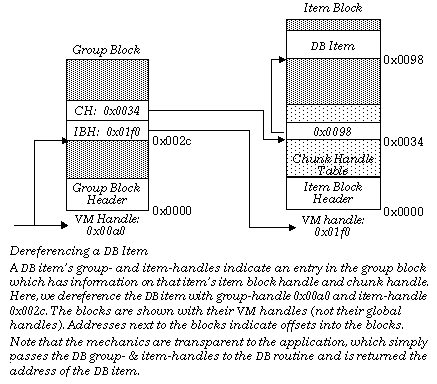
The group block contains information about each item block and each item in the group. For each item block, it records the VM handle of the block and the number of DB items in the block. For each DB item, it records the VM handle of the item block in which the item is stored and the item's chunk handle within that item block. The item blocks are simply LMem heaps with a little extra information in the headers.
The item's group-handle is simply the VM handle of the group block for that group. The item's item-handle is an offset into the group block; the information about the item is stored at that offset. When you lock an item, the DB manager looks in that location in the group block and reads the handles of the item block and the chunk associated with that item; it then locks the item block and returns the address of the chunk. (In assembly code, it returns the segment address and the chunk handle.) The relationship between the different blocks and handles is shown in the figure below.
Whenever you access a DB item, the DB manager has to lock the block. If you access several items in a row, the overall access time is better if they belong to the same group since only one group block will need to be swapped in to memory. The items may also be in the same item-block since each item block contains items from only one group; again, this improves access time. Thus, it is a good idea to distribute items in groups according to the way they will be accessed; for example, an address-book database might group entries according to the first letter of the last name, thus speeding up alphabetical access. If you have no logical way to group items, see Ungrouped DB Items.
GEOS SDK TechDocs|
| 2.1 DB Items | 2.3 Allocating Groups and Items